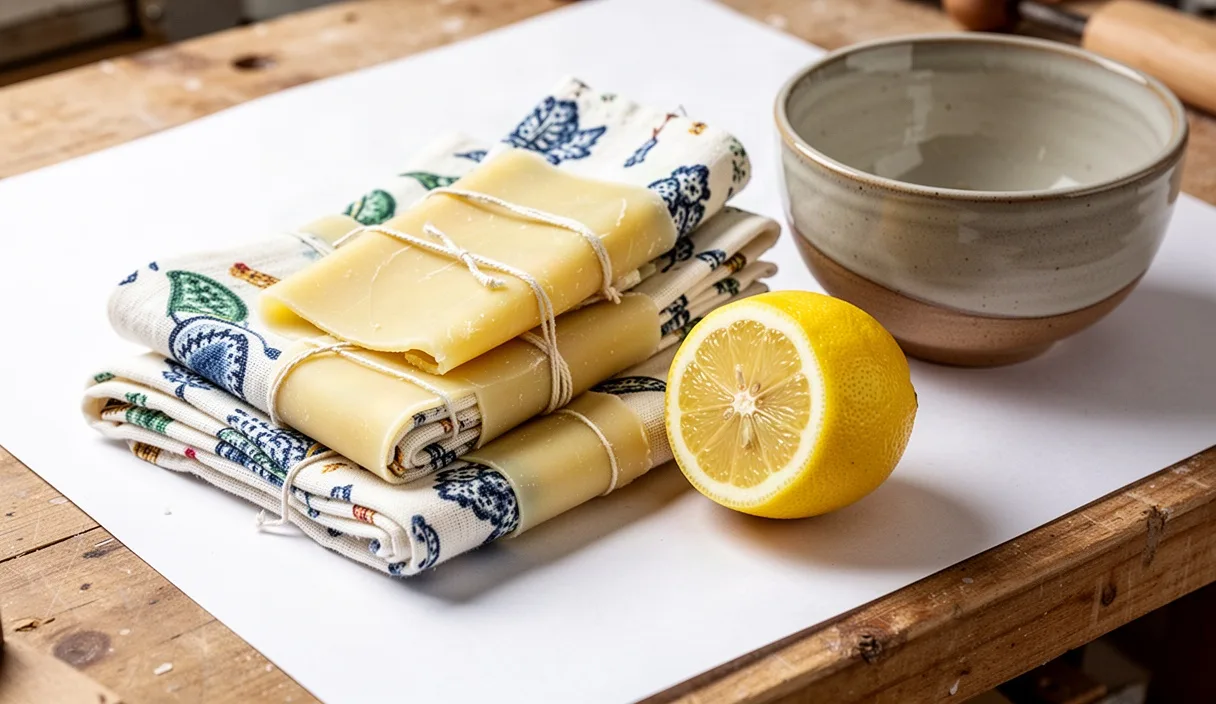
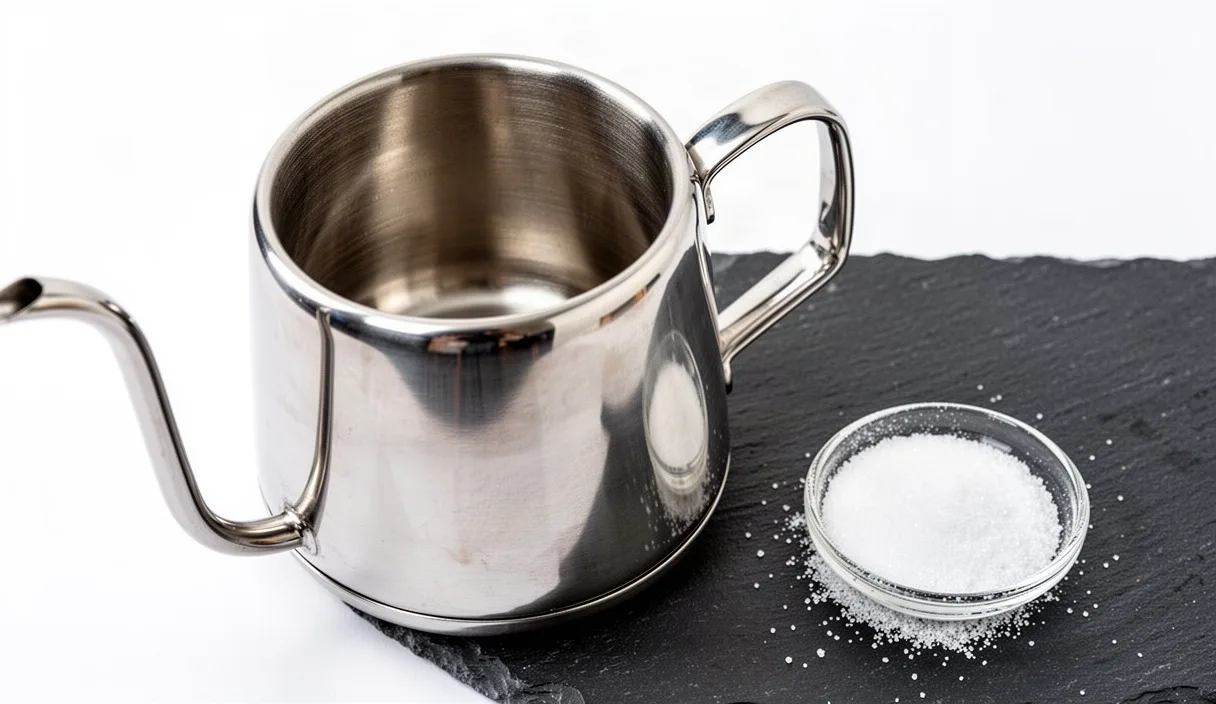
Water drawn from deep wells and municipal lines alike carries the dissolved memory of underground bedrock. When we channel this water into our workshops, kitchens, and utility closets, we subject it to heat. The clear liquid gives up its dissolved minerals, coating bright copper bottoms, rolled steel jackets, and immersion rods with a pale, stony armor. This crust, known simply as scale, chokes the transfer of heat, forces electric elements to run red-hot beneath an insulating layer of rock, and narrows the throat of valves until a free-flowing spigot reduces to a sputtering trickle.
Restoring these vessels does not require caustic industrial cleaners or harsh synthetic solvents that taint our brewing vessels and degrade plumbing packings. By understanding the mineral chemistry at play, we can dismantle these chalky accretions using mild, dry organic acids that leave no stubborn odors behind. With an accurate scale, a scoop of citric crystals, and deliberate control of water temperature, we dissolve the calcified shell while preserving the integrity of the underlying metal.
The Chemistry of Mineral Scale Formation
The scale that lines the floor of a copper kettle or builds up around the lower element of an electric water heater is predominantly calcium carbonate, often accompanied by magnesium carbonate and traces of silica. Rainwater absorbs atmospheric carbon dioxide as it falls, becoming slightly acidic carbonic acid. As this water percolates through limestone, chalk, and dolomite strata, it dissolves calcium and magnesium, holding them in solution as soluble bicarbonates.
The moment we apply heat, this chemical equilibrium shifts. Temperature breaks the bond of the bicarbonate ions, driving off carbon dioxide gas and leaving behind insoluble carbonates. In our electric kettles, this transformation announces itself with a crackling, snapping sound during heating. This noise is nucleate boiling occurring under a blanket of stone, where pockets of superheated steam struggle to break free from beneath the chalky sheet.
As this layer thickens from a light dusting into an opaque, rough pavement, it functions as a stubborn thermal insulator. Calcium carbonate has a thermal conductivity roughly thirty times lower than stainless steel and three hundred times lower than pure copper. The immersion coil or firebox plate must run significantly hotter to push BTUs through the calcified barrier into the water column. In domestic water heaters, this thermal stress causes immersion elements to buckle and split, while the bottom heads of gas-fired tanks overheat and fatigue prematurely.
Why Citric Acid Outperforms Pungent White Vinegar
For generations, standard household practice reached for distilled white vinegar to strip lime. While standard grocery-store vinegar contains roughly four to six percent acetic acid by volume, its low efficiency and lingering vapors make it a poor choice in a careful workshop. Acetic acid is volatile, meaning its sharp, sour vapor disperses readily into the room air and clings stubbornly to porous materials. Food-grade silicone gaskets, synthetic rubber O-rings, and brew kettle sight glasses absorb acetic acid molecules, imparting an acrid taste to coffee or tea for weeks after the cleaning is finished.
Citric acid, derived from citrus fruits or fungal fermentation, presents distinct mechanical and chemical advantages over vinegar. It is a crystalline solid, making it simple to store in dry paper bags on a shelf of liquid spills or vapor leaks. When dissolved in warm water, it acts as a tricarboxylic acid, releasing three hydrogen ions per molecule compared to the single ion released by acetic acid. This molecular structure allows citric acid to bind directly to calcium ions through chelation, wrapping around the mineral atom and forming a soluble calcium citrate complex that stays suspended in the water rather than redepositing elsewhere in the plumbing.
| Property | Citric Acid Solution | Distilled White Vinegar |
|---|---|---|
| Physical State for Storage | Dry, stable crystalline powder | Dilute liquid in plastic jugs |
| Vapor and Odor Profile | Non-volatile, completely odorless | Pungent, persistent volatile vapor |
| Available Active Sites | Three carboxyl groups per molecule | One carboxyl group per molecule |
| Impact on Elastomers | Gentle on silicone and EPDM gaskets | Can swell or soften natural rubbers |
| Chelation Ability | Strong multi-point bond with calcium | Weak single-point association |
Because citric acid does not generate choking fumes when brought near boiling temperatures, we can safely apply heat to accelerate the reaction. This thermal boost cuts hours off the descaling process without driving anyone from the workshop or kitchen.
Calculating Acid Ratios for Light and Heavy Buildup
We work with anhydrous food-grade citric acid powder, which can be weighed on a gram scale for exact consistency. The amount of acid needed depends entirely on the volume of the vessel and the severity of the mineral deposits. Preparing the bath with warm tap water ensures the crystals dissolve quickly into a uniform solution before we introduce the liquid to the vessel.
- Light haze maintenance: 25 grams of citric acid per 1 liter of water. This dilution works well for monthly maintenance on pour-over kettles and immersion heaters where the metal surface has turned hazy or dull, but no raised ridges of stone have formed yet.
- Moderate calcification: 50 grams of citric acid per 1 liter of water. We employ this ratio when the heating surface displays distinct white scabs, rough flaking patches, or when the kettle takes noticeably longer to reach a rolling boil.
- Heavy crust and tank reclamation: 75 grams of citric acid per 1 liter of water. Reserved for neglected tankless heat exchanger coils, workshop water heaters that have run for years without maintenance, or cast-iron wash pots crusted with thick mineral slabs.
To descale a standard countertop kettle with a capacity of 1.7 liters showing moderate mineral scale, we dissolve 85 grams of dry citric acid into warm water, fill the kettle to its maximum line, and stir until the liquid clears. For a small 6-gallon point-of-use domestic water heater, the same 50-gram-per-liter ratio requires roughly 1100 grams of powder dissolved in water and introduced directly through the cold inlet or anode port after the tank is drained.
Heating Cycles for Fast Mineral Dissolution
Chemical reactions double in rate with roughly every ten-degree Celsius rise in temperature. While a cold citric bath will dissolve calcium carbonate if left overnight, bringing the wash to a controlled warm state completes the work in under an hour. However, boiling an acidic solution vigorously inside a closed vessel creates excessive turbulence and can cause acid foam to escape through spouts or pressure relief ports.
Kettles and Stovetop Vessels
Fill the vessel with the pre-mixed citric solution to cover the highest mineral line. Set the kettle over a low flame or engage the electric switch, allowing the liquid to rise to approximately 65 to 70 degrees Celsius, which is the point where fine bubbles begin to form on the floor of the vessel, well before a rolling boil. Turn off the heat completely.
Allow the warm acid to sit quietly for 25 to 30 minutes. As the bath works, you will see a gentle effervescence rise from the mineral crust as carbon dioxide gas releases into the liquid. If thick patches remain after half an hour, warm the water back up to 70 degrees Celsius for a second soaking period. Once the metal shines clean, discard the solution and rinse thoroughly with three successive fills of clean, cold water.
Tankless Coils and Storage Water Heaters
Working on closed plumbing vessels requires a recirculating approach or an isolated static soak. For tankless instantaneous water heaters, plumbers use a small submersible utility pump in a five-gallon bucket to cycle the citric solution through the isolation service valves. Maintain the bucket water around 45 degrees Celsius using an immersion bucket heater, circulating the solution through the copper coil for 45 minutes to an hour. The fluid will cloud as the calcium citrate forms.
For standard electric storage tanks, power must be turned off at the electrical breaker before draining the tank. Never energize heating elements while dry or submerged in an active cleaning bath. Pour the calculated citric solution into the tank through the cold-water inlet or upper element port, top the tank with warm water, and let it soak without active power for 90 minutes before flushing the vessel through the bottom drain bib.
Protecting Copper and Brass Elements from Oxidation
While stainless steel shrugs off mild organic acids, red metals demand closer attention. Copper, brass, and bronze react differently to extended acidic baths. Citric acid readily strips copper oxide, the thin brown or black layer that forms naturally on red metal, exposing bright, bare pink elemental copper. While visually striking, metal in this state is temporarily vulnerable to accelerated tarnishing and galvanic reaction.
Brass is an alloy of copper and zinc. If subjected to prolonged exposure to warm acid solutions exceeding two or three hours, brass can suffer from dezincification. The acid selectively leaches zinc atoms from the surface of the alloy, leaving behind a porous, brittle, copper-rich sponge that weakens threaded pipe nipples, petcock drains, and valve seats. Keep contact times on brass fittings strictly under 45 minutes.
- Monitor surface color: Inspect copper vessels periodically during the soak. When the mineral crust disappears and the copper turns a uniform salmon-pink, the reaction is finished. Do not leave the solution standing overnight.
- Apply a neutralizing rinse: Empty the acidic bath and flush the interior with plenty of fresh water. For heavy brass fittings or vintage copper ware, follow the fresh water with a mild alkaline wash made of 5 grams of baking soda (sodium bicarbonate) dissolved in 1 liter of cold water. This neutralizes any traces of acid caught in seam crevices or thread roots.
- Dry and passivate: Dry the metal thoroughly with a soft cotton rag. Allow copper surfaces to air-cure in a dry room for 24 hours before filling with water again. Exposure to clean air allows a uniform, protective oxide barrier to re-form across the raw metal face naturally.
Routine Flushing Habits to Prolong Heating Elements
The easiest lime to remove is the lime that has not yet bonded to the metal. A vessel maintained on a steady schedule rarely needs mechanical scraping or concentrated acid washes. Developing a regular rhythm with your water gear prevents scale from compacting into crystalline stone.
Empty countertop kettles completely at the end of every day. Leaving standing water to cool overnight provides the ideal static environment for suspended minerals to fall out of solution and anchor to the heated bottom plate. Hang the vessel upside down on a drying rack or wipe the base dry with a linen towel so water droplets cannot evaporate in place, leaving their mineral rings behind.
Storage water heaters require a physical flush every six months to sweep out loose calcified silt before it bakes into a hardened mass around the burner or immersion elements. Connect a garden hose to the bottom drain valve, open the tap fully with the cold supply valve active, and blow down the sediment bed until the water runs clear. If the drain valve is clogged with gravel-like scale chips, a licensed plumber should be brought in to replace the plastic factory drain with a full-port brass ball valve, which allows larger mineral flakes to exit without choking the waterway.
Common Mistakes
A few errors can damage equipment or reduce the effectiveness of a natural descaling run. Keep these points in mind before mixing your cleaning solution:
- Scraping with hardened tools: Never attack scale beds with screwdrivers, putty knives, or coarse steel wool. Gouging the stainless steel lining or scratching nickel plating creates micro-crevices that give future mineral layers a mechanical key to bond to even tighter. Use a soft nylon bristle brush or a wooden dowel trimmed to a chisel edge to dislodge stubborn flakes.
- Boiling the solution dry: Leaving an electric kettle or pot unattended on heat during a descaling cycle can drive off all water, baking concentrated citric acid onto the heating element. This creates a charred, caramelized residue that is far more difficult to remove than the original mineral scale.
- Ignoring the sacrificial anode: In domestic water heaters, citric acid will react vigorously with magnesium or aluminum sacrificial anode rods, eroding them rapidly and filling the tank with excessive foam. If you plan an extensive flush on a tank heater, pull the anode rod beforehand or limit the flush to shorter, controlled cycles.
- Relying on cold soaks for heavy buildup: Pouring cold citric acid into a tank and expecting thick crust to vanish leads to frustration. Without moderate warmth, the dissolution of thick calcite slabs proceeds at a crawl, requiring excessive soaking times that risk unnecessary acid exposure to fittings.
Practical Next Steps
Take inventory of your hot-water vessels. Check the base of your daily kettle with a small flashlight. If you spot a white clouding or a powdery sand-like texture on the metal floor, weigh out 40 to 50 grams of food-grade citric acid powder, dissolve it in warm water, and run your first gentle 70-degree soak this evening.
For your utility room water heaters, locate the model plate to find the tank capacity and examine the lower drain bib. If water from the drain bib runs turbid or spits white flakes, source two kilograms of dry citric crystals and schedule a morning to isolate, drain, and flush the system. If you are uncertain about shutting off high-voltage breakers, isolating gas lines, or navigating pressurized municipal plumbing, consult a licensed plumbing professional to supervise or perform the flush on large domestic installations.