When we pull a fresh carbon steel skillet from its brown butcher paper, we hold a tool in its rawest state. Pressed from sheets of low-carbon iron under mechanical dies, the metal is cold, heavy, and slate-grey, measuring between two and three millimeters of dense plate. In our workshop and kitchen, carbon steel stands between cast iron and copper: it takes heat quickly, shifts temperatures with precision, and weighs enough to hold a searing temperature against a cold steak without warping.
Before this cold-rolled plate can fry an egg or roast a chicken thigh, we must build a dark, glass-smooth layer across its face. Seasoning is not a decorative paint. It is a chemical transformation where unsaturated dietary fats convert into an insoluble, tough polymer matrix bonded directly inside the microscopic fissures of the metal. Through clean preparation, proper lipid selection, and controlled fire, we transform bare, vulnerable steel into a reliable daily workhorse.
Stripping the Factory Wax Coating
Before a skillet leaves the manufacturer, the metal is coated to prevent oxidation during sea transport and warehouse storage. Makers typically dip the pans in paraffin wax, technical mineral grease, or unrefined beeswax. If we apply cooking oil directly over this preservative barrier, the heat will trap the wax beneath the polymerizing oil, resulting in a weak, cloudy surface that flakes off during your first cook.
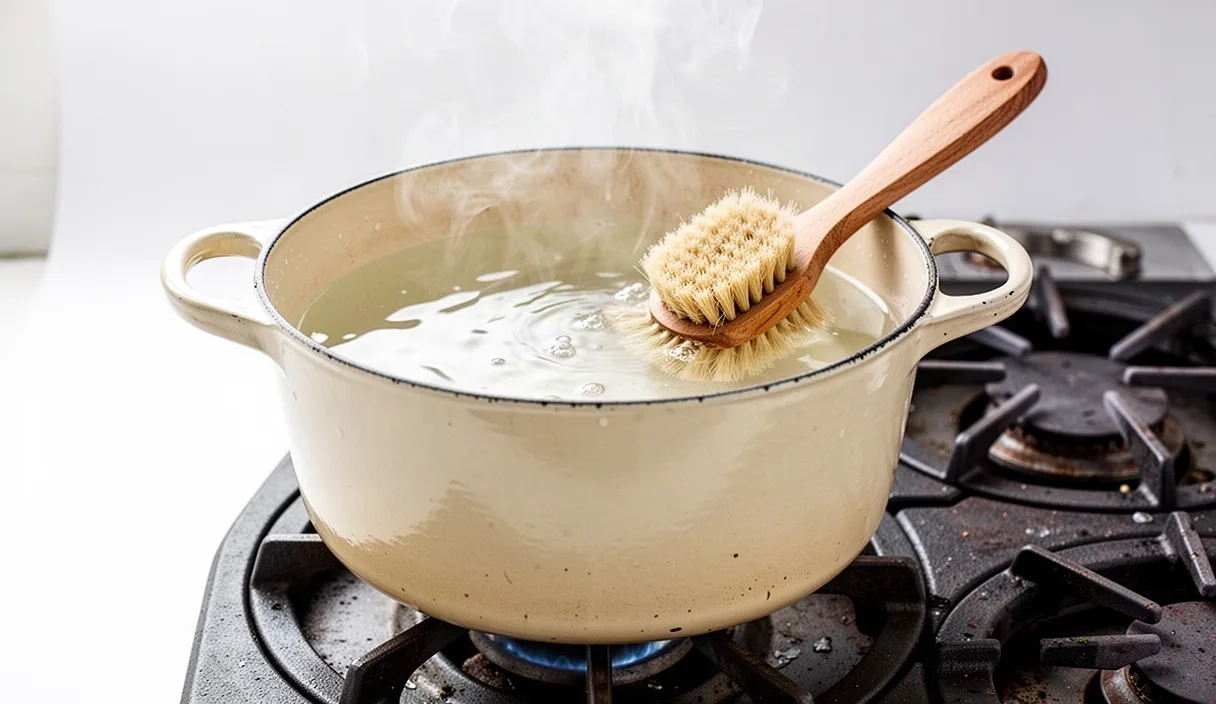
To strip this layer, place the pan directly in a sink and boil a full kettle of water. Pour the rolling boiling water across the interior and exterior cooking faces to melt the wax film. While the metal is hot, scrub the surface aggressively using a stiff-bristled brush, a copper scouring pad, and a few drops of standard dish detergent. This initial wash is the only time we recommend using strong detergents and aggressive abrasives on carbon steel.
Rinse the pan with clean boiling water. Run your fingertips across the bare metal: it should feel dry, grabby, and raw, with no slick or waxy glide. If the surface still beads water in distinct droplets rather than sheeting off the metal, wax remains. Repeat the boiling rinse and scrub once more. Immediately dry the steel with a clean towel to prevent the rapid formation of flash rust, which can bloom on raw steel within two minutes of water contact.
Selecting the Correct Oil for Polymerization
Polymerization requires an oil rich in polyunsaturated and monounsaturated fatty acids. When exposed to continuous, high heat, these fatty acid chains break down, oxidize, and cross-link with one another, forming a dry, hard organic plastic that mechanically locks into the crystalline surface of the steel. Saturated fats like tallow, butter, or coconut oil produce a softer, less resilient barrier that breaks down under high heat.
We look for drying and semi-drying oils with moderate-to-high smoke points. While raw flaxseed oil was widely recommended for many years due to its high alpha-linolenic acid content, we have found that flax builds a brittle crystalline structure that often chips away under daily thermal shock. Refined grapeseed oil and refined sunflower oil provide the most stable balance of unsaturated bonds, high thermal resistance, and flexible durability.
| Oil Type | Smoke Point | Polymer Toughness | Practical Application |
|---|---|---|---|
| Refined Grapeseed | 420 degrees Fahrenheit | High | Our preferred base coat; creates a slick, durable, non-flaking film. |
| Refined Canola | 400 degrees Fahrenheit | Moderate | Widely accessible; produces a slightly softer finish that darkens quickly. |
| Refined Sunflower | 440 degrees Fahrenheit | High | Excellent for high-heat seasoning; bonds tightly without sticky residue. |
| Flaxseed (Unrefined) | 225 degrees Fahrenheit | Very Low (Brittle) | Forms a very dark, glossy surface initially, but chips under hard utensil contact. |
Avoid cold-pressed, extra virgin oils. The volatile particulate matter, unrefined waxes, and free fatty acids present in unrefined olive or avocado oils burn into charcoal ash before the lipids can polymerize, creating a crusty, porous surface rather than a smooth, protective plane.
Wiping the Pan to a Matte Film
The single most prevalent mistake in seasoning ironware is leaving too much oil on the surface. Liquid oil does not bake into a smooth finish when pooled; it bubbles, contracts, and hardens into thick, amber-colored varnish that feels gummy under the thumb and grabs onto food. Our goal is to heat an oil layer only a few molecules thick.
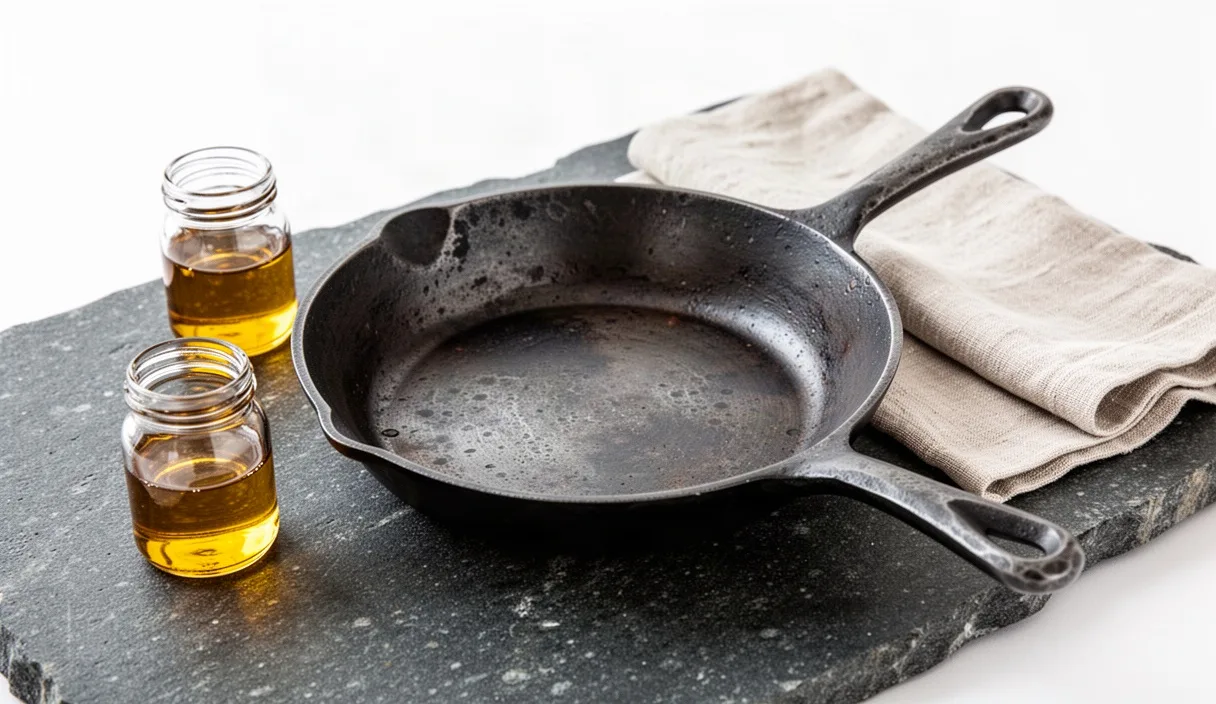
Place the dried skillet on the stovetop over low heat for two minutes to expand the steel's pores and drive out residual moisture. Pour a drop of grapeseed oil no larger than the diameter of a dime into the center of the pan. Using a folded cotton cloth or heavy unbleached paper towel, rub the oil over every millimeter of the pan, including the rim, the underside, and the handle junction.
Once the pan is completely glossy, take a second, entirely dry cotton cloth and wipe the metal down as though you made an error and are trying to remove all traces of the fat. Buff the surface with firm, deliberate strokes until the metal no longer shines wet. It should appear bone-dry and matte. What remains across the steel is an invisible, microscopic sheen that will yield a durable layer without pooling.
Managing Stovetop Heat and Smoke Points
While an oven works well for cast iron, we season carbon steel directly on the stovetop. This gives us direct control over the heat zones and lets us watch the shifting colors of the steel as heat alters the metal and polymerizes the oil. Use an extraction fan or open nearby windows, as the transformation requires pushing past the oil's smoke point.
- Slow Thermal Conditioning: Set your burner to medium-low. Allow the steel to heat evenly across its base for four to five minutes. Heating cold carbon steel too fast on an induction or high-output gas burner can warp the flat bottom plate.
- Advancing to the Smoke Threshold: Raise the heat to medium. Within two to three minutes, faint wisps of white smoke will rise from the center of the skillet. The steel beneath will begin to shift from dull grey to pale straw-yellow, then to a rich bronze.
- Rotating the Thermal Ring: Skillet walls do not get as hot as the base over a burner. Use a heat-resistant cloth to grip the handle, tilting and rotating the pan so the flame or burner element runs along the sloping sidewalls for two minutes per quarter.
- Full Evaporation: Keep the pan at this smoke point until the smoking visibly slows and stops, which typically takes between three and four minutes. The surface will shift from bronze to a deep, blue-tinged charcoal.
- Controlled Cooling: Turn off the flame completely. Let the pan rest undisturbed until the metal is cool enough to touch with an unshielded hand. This rest period allows the newly formed polymer chains to contract and settle into the grain of the steel.
Repeat this application and heating cycle three times. With each thin coat, the pan deepens in tone, progressing toward a smooth, uniform walnut patina that acts as your daily protective base.
Diagnosing Uneven Color and Sticky Spots
A seasoned carbon steel pan rarely looks like uniform black enamel. Metal stamped from industrial rollers has subtle density variations, and open flame creates varied thermal zones. A blotchy, mottled surface with hues of bronze, grey, and brown is structurally sound and typical of honest workshop cookware.
However, tacky, soft areas that leave a fingerprint represent incomplete polymerization or excess oil application. To remedy this without stripping down to bare metal, apply the following corrective actions based on the surface texture:
- Sticky, Speckled Spots: Pour three tablespoons of coarse kosher salt and one teaspoon of neutral oil into the pan. Cut a square of canvas or fold a shop towel, and scrub the salt firmly across the sticky zones. The coarse salt crystals abrade the soft, tacky oil without gouging the hard polymer beneath. Dump the salt, wipe clean, and reheat until the residue smokes away.
- Thick, Peeling Patches: If fat was allowed to pool, it will flake off in black flakes, exposing bare raw steel. Use a flat-edged metal spatula held at a low angle to scrape away the brittle raised edges. Buff the exposed spot smooth with a scouring pad, wipe with a vanishingly thin coat of oil, and perform a brief stovetop seasoning cycle directly on that area.
- Orange Flash Rust: If moisture reaches the metal during a wash, orange spots will bloom. Wipe the area with an oil-soaked cloth to remove the iron oxide, then bring the pan to smoking heat for two minutes to seal the breach.
Daily Washing Without Soap Stripping
Once your carbon steel holds its base seasoning, maintenance requires gentle, consistent habits rather than aggressive restoration. The base polymer is chemically resistant to brief contact with mild surfactant soaps, but strong lye-based soaps or prolonged steeping will soften the seasoning matrix and compromise the iron underneath.
Clean the pan immediately after cooking while the metal retains moderate warmth. Scrape food residue loose using a square-edged wooden or metal spatula. Run hot tap water into the warm pan, scrub it with a stiff horsehair or tampico bristle brush, and dump the rinse water. Never plunge a red-hot pan into a sink of cold water, as the extreme thermal change can bend the flat bottom into an uneven dome.
If stubborn starch or protein remains glued to the bottom, add a cup of water to the pan and return it to the stove for two minutes. As the water simmers, the burnt residue will lift naturally without heavy scouring. Avoid the dishwasher entirely; the harsh alkalis and sustained steam cycles will strip your seasoning in a single cycle, turning your smooth skillet into an oxidized wreck.
After washing, immediately dry the skillet with a towel, then set it over a medium burner for ninety seconds. The heat evaporates microscopic water droplets lingering in the pores. While the pan is warm, apply half a drop of oil with a dry cloth, buff it until no gloss remains, and store it in an open, ventilated cupboard.
Common Mistakes
- Over-Oiling on Application: Leaving visible wetness in the pan before applying heat, which causes gumming, stickiness, and subsequent flaking.
- Thermal Shock on Induction: Dialing an induction cooktop instantly to its highest power setting. The rapid expansion of the bottom plate causes the center to buckle upward before the sidewalls warm.
- Early Introduction of Acids: Simmering white wine, tomatoes, vinegar, or citrus sauces in a skillet that has only received its initial coats. Acid dissolves young polymer chains and exposes raw iron.
- Air-Drying on the Counter: Allowing washed carbon steel to dry slowly on a drying rack, which invites moisture to seep under the rim and handle welds, seeding rust.
Long-Term Care and Next Steps
The dark patina of an active kitchen skillet is an evolving surface. For your first ten uses, choose dishes rich in natural fats: sear ribeyes, sauté button mushrooms in lard, fry small batches of potatoes, or cook skin-on poultry. Each contact with hot fat and dry heat adds a micro-layer of cured seasoning over your base foundation.
Avoid scraping the surface with sharp points, and keep acidic pan sauces in your stainless steel cookware until the carbon steel has developed a seasoned face through several months of steady work. If you notice the base lightening or losing its water-shedding properties, spend ten minutes on the burner with a drop of grapeseed oil to restore the surface.
If you encounter deep structural warping or severe, deep-pitted corrosion that threatens the pan's balance on your cooktop, consult a metalworker or consider a full mechanical resurfacing with an abrasive wheel. Treated with an understanding of steel and oil, a simple carbon skillet will easily outlast the hands that seasoned it.